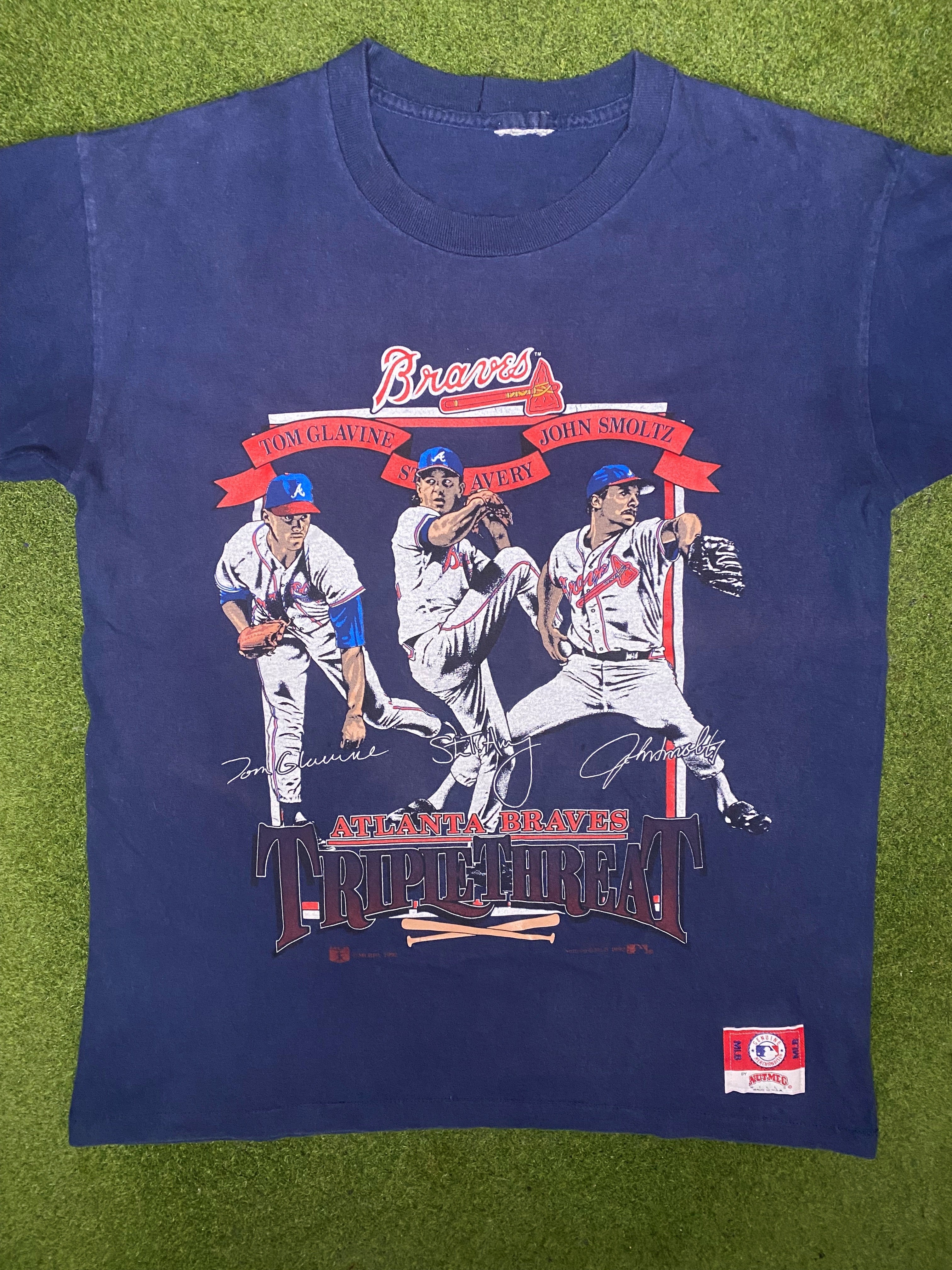
When Logos Spoke Louder Than Words: The Art of Vintage Team Design
ntroduction: When Design Defined the Game
Before marketing teams and rebrands became the norm, sports logos were crafted with personality, grit, and purpose. They told stories — not through slogans or campaigns, but through color, character, and connection.
These were logos that didn’t need a tagline to be remembered. The screaming eagle, the charging bull, the script font you could spot from a mile away — they captured the pride of cities and the dreams of fans.
In the golden age of design — the 70s, 80s, and 90s — team logos weren’t just brand marks. They were works of art.
At GametimeVintage.com, we celebrate that era through authentic vintage apparel — preserving the colors, shapes, and emotions that defined generations of sports fans.
The Power of Simplicity: When Less Said More
Think about the New York Yankees’ interlocking “NY”, the Dallas Cowboys’ single star, or the Chicago Bulls’ red snarl. Each of these designs has barely changed in decades — and for good reason.
They prove that clarity beats complexity. A powerful logo doesn’t shout. It stands tall, confident in its simplicity.
In the 70s and 80s, most teams had just one mark — no alternate versions, no gradient overlays, no annual rebrands. Fans saw a logo and immediately felt belonging. That’s the magic of simplicity — it creates recognition, and recognition builds legacy.
Every time someone wears a cracked Bulls sweatshirt or a faded Yankees hat, they’re not just wearing a design — they’re wearing identity.
The Era of Fearless Design: When Teams Took Risks
By the 1990s, sports logos exploded in creativity. Teams embraced bold fonts, cartoon-style mascots, and fearless color palettes that pushed boundaries.
-
The Toronto Raptors gave us a sneaker-wearing dinosaur.
-
The Anaheim Mighty Ducks dropped a hockey mask logo straight from a movie screen.
-
The Vancouver Grizzlies and Charlotte Hornets went wild with teal and purple — colors that shouldn’t have worked but somehow defined the decade.
These weren’t just logos — they were statements. They turned sports into lifestyle, and teams into fashion brands.
When you wear a 90s Hornets tee or a Mighty Ducks windbreaker, you’re not just nostalgic — you’re wearing the last era of fearless creativity.
👉 Browse authentic vintage 90s team apparel now at GametimeVintage.com.
The Psychology of Color in Team Identity
Every great logo tells a story — and color is its emotional language.
Here’s what vintage team designers understood long before data-driven branding existed:
-
Red: Energy, aggression, power (think Bulls, 49ers, Cardinals).
-
Blue: Trust, loyalty, legacy (Dodgers, Yankees, Cowboys).
-
Green: Grit, growth, and underdog energy (Jets, Sonics, Packers).
-
Gold: Glory and prestige (Lakers, 49ers, Notre Dame).
Teams didn’t just pick colors that “looked cool” — they chose ones that felt right. Colors became shorthand for emotion.
When you see that faded green Eagles sweatshirt from the 80s, your brain knows exactly what it means — loyalty, toughness, and Philly pride.
Logos as City Symbols
What makes sports logos so powerful is how deeply they’re tied to place.
The skyline in the Seattle Supersonics logo, the bridge in the Golden State Warriors emblem, the “Old English D” of Detroit — these designs weren’t just about teams. They were love letters to cities.
That’s why vintage sportswear carries emotional weight. Fans wore it not just for the players, but for the place — the people, the pride, the pulse of their hometown.
At Gametime Vintage, we see that every day. A customer buying a faded 1993 Cleveland Indians hoodie isn’t just buying a garment — they’re buying back a piece of their youth, their city, their story.
When Logos Became Fashion
By the late 80s and early 90s, sports logos had officially gone mainstream.
They appeared in music videos, streetwear, and magazines.
-
N.W.A. made the Raiders logo a cultural movement.
-
LL Cool J rocked Yankees gear before every performance.
-
Will Smith and Fresh Prince made bold team colors a staple of youth fashion.
That crossover between sports and music turned logos into fashion icons. Suddenly, everyone wanted to rep a team — even if they’d never watched a game.
Today, that same energy drives the vintage market. Authentic 90s team apparel has outlasted trends because it carries cultural DNA — it’s as much about attitude as athletics.
At GametimeVintage.com, every vintage tee and jacket tells the story of that crossover — when fandom became fashion.
The Lost Art of Design: Why Vintage Feels More Human
Modern logos often feel overdesigned — optimized for screens but stripped of soul. The imperfections of vintage logos — the thick lines, the uneven embroidery, the off-center prints — are what make them real.
They remind us of a time when art came before analytics. When every curve and color had meaning. When logos didn’t just represent brands — they represented belief.
Wearing vintage is wearing a reminder: design used to have heart.
Why Gametime Vintage Protects the Legacy
At Gametime Vintage, we don’t see logos as decorations — we see them as living history.
Each item in our collection — whether it’s a 1989 Raiders jacket, a 1994 Bulls tee, or a 90s Mariners sweatshirt — preserves the craftsmanship and creativity that made sportswear legendary.
We hand-pick authentic vintage pieces from across decades to keep those designs alive — because the stories they tell are too important to fade.
👉 Explore authentic vintage NFL, NBA, MLB, and NCAA apparel now at GametimeVintage.com.
Final Thoughts: The Art That Endures
The greatest sports logos were never just designs. They were symbols of identity — drawn by hand, printed with pride, and worn by millions.
They spoke louder than words because they didn’t need any.
And today, they still do.
Every time you pull on a vintage crewneck, zip a satin jacket, or throw on an old snapback, you’re not just wearing fashion — you’re wearing art, legacy, and emotion.
At GametimeVintage.com, that legacy lives on.
The art hasn’t faded. It’s just vintage.