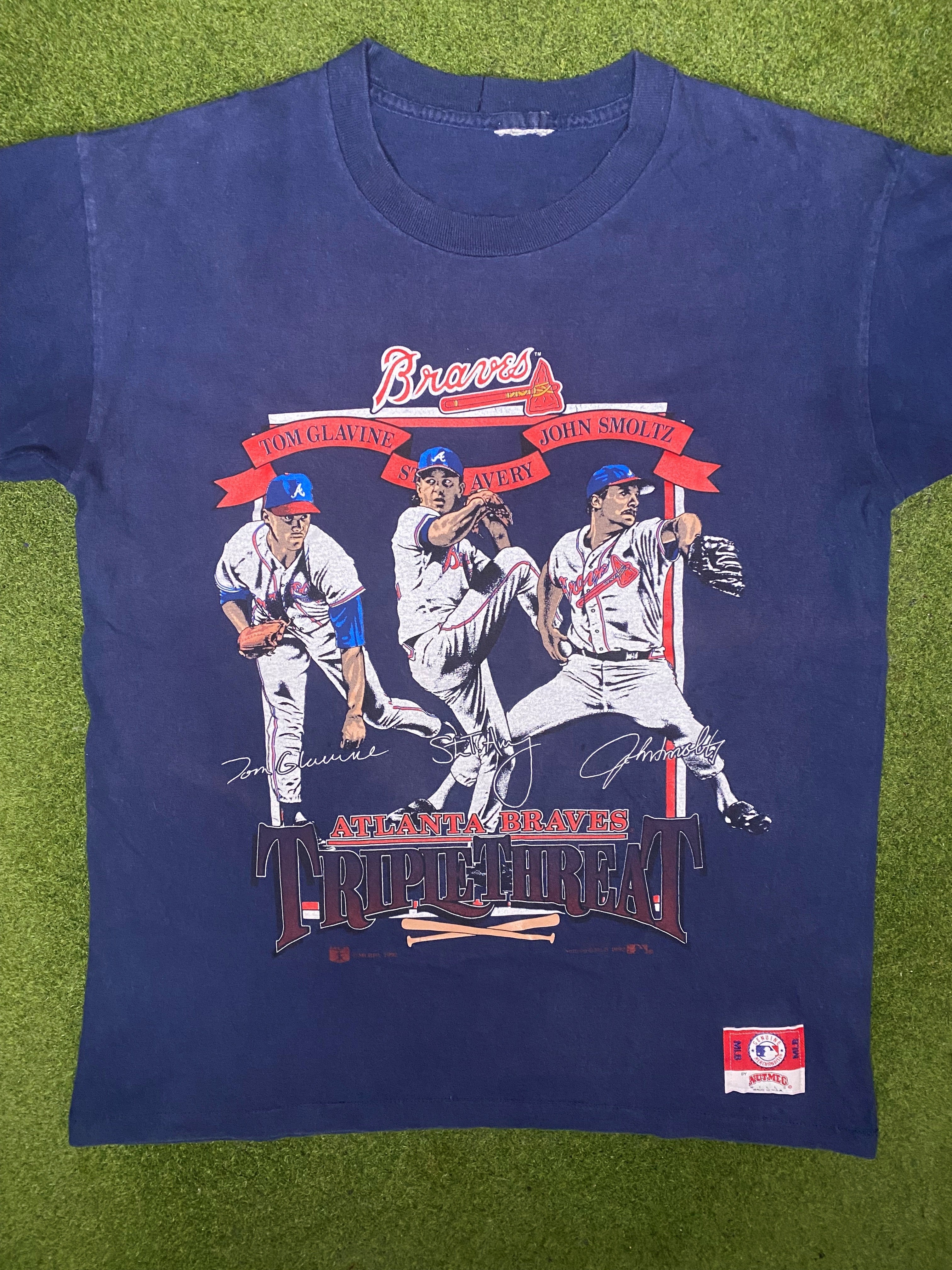
When Logos Ruled the World: The Rise of Big-Logo Sportswear in the 90s
Introduction: Louder, Bolder, and Proudly Branded
The 1990s weren’t subtle.
It was an era of big beats, big dreams, and even bigger logos.
From the courts of the NBA to the hallways of high schools, everyone wore their loyalty loud — splashed across oversized sweatshirts, satin jackets, and puff-print tees. This was the decade when sportswear stopped whispering and started shouting.
Brands like Starter, Nike, Champion, Reebok, and Adidas turned team pride into a fashion statement. Logos became art, identity, and attitude. This is the story of how the 90s logo craze began, why it dominated fashion, and why today’s collectors can’t get enough of it.
The Origins: Small Logos and Subtle Branding (1970s–1980s)
Before the 90s, logos played a supporting role.
-
In the 70s and 80s, sportswear brands preferred clean, minimalist design.
-
Nike’s swoosh, Adidas’ three stripes, and Puma’s leaping cat were simple marks — functional, not flamboyant.
-
Team apparel featured understated chest logos or sleeve patches, not full-front explosions.
But by the late 80s, America’s fashion appetite had changed. Hip-hop was on the rise. Sports were more televised than ever. And fans wanted to wear what they saw on screen — not quietly, but proudly.
The Explosion: The 1990s Logo Boom
When the 90s arrived, subtlety went out the window.
The Sportswear Takeover
-
Brands like Starter and Champion secured licensing deals with the NFL, NBA, MLB, and NCAA.
-
Sweatshirts, jackets, and tees featured massive embroidered and applique team logos across the chest.
-
Fans could now rep their team in bold color-blocked designs that screamed authenticity and style.
The look was loud, proud, and instantly recognizable. You didn’t need to ask someone who they rooted for — their sweatshirt told you from across the room.
The Starter Era: “Look for the Star”
No brand defined the big-logo era like Starter.
-
Their iconic satin jackets with huge front and back team logos became fashion essentials.
-
The “Look for the Star” patch was a badge of credibility — proof you were wearing the real thing.
-
Starter’s partnerships with leagues turned sportswear into a global phenomenon.
Teams like the Chicago Bulls, Charlotte Hornets, and Oakland Raiders sold millions of units.
Why It Worked:
Starter made fans feel part of the team, blending luxury design with athletic identity — long before “athleisure” was a word.
The Power of Television and Music Videos
The big-logo craze didn’t stay on the field — it exploded on screens.
Sports Broadcasts
With ESPN booming and the NBA entering its global era, millions of viewers saw bold team logos every night. Players’ warm-ups and fan gear became instant status symbols.
Music Videos & Hip-Hop Culture
Hip-hop embraced sportswear as streetwear.
-
RUN-D.M.C. wore Adidas.
-
Tupac and Biggie wore Raiders and Bulls gear.
-
LL Cool J, Kris Kross, and A Tribe Called Quest rocked oversized Champion and Starter fits.
The look was confident, defiant, and distinctly 90s. Sportswear became a language of identity and rebellion — worn as proudly on the block as in the bleachers.
College Pride and Campus Culture
Big logos weren’t limited to professional sports.
-
Champion led the college market with oversized crewnecks and sweatshirts featuring bold university lettering.
-
Harvard, Georgetown, Michigan, North Carolina, and Notre Dame gear dominated mall shelves and dorm closets.
-
The “collegiate bold font” became a style all its own — blending academia and athleticism.
Every college kid wanted that thick, reverse-weave sweatshirt with the big, arched school name across the chest.
Why Big Logos Worked: Identity and Confidence
The 90s logo craze reflected the cultural energy of the time.
-
Self-Expression – Wearing a team or brand was a declaration of who you were.
-
Tribalism – Sports loyalty translated into fashion loyalty.
-
Accessibility – Fans could finally afford gear that matched what pros wore.
-
Status – Big brands equaled big confidence.
Fashion became democratic — you didn’t need a designer label to make a statement. You just needed a bold logo and a little swagger.
Beyond Sports: The Crossover into Pop Culture
The 90s were an era when sports, music, and fashion collided seamlessly.
-
Movies like Space Jam, He Got Game, and White Men Can’t Jump showcased sportswear as lifestyle.
-
Rappers and athletes became interchangeable style icons.
-
Music groups like Boyz II Men wore team jackets in R&B videos.
The big logo wasn’t just a design trend — it was a symbol of cool.
The Fall: Minimalism Takes Over (2000s)
By the early 2000s, the pendulum swung the other way.
-
Designers embraced minimalism and sleek branding.
-
Brands like Nike and Adidas toned down their graphics for cleaner, performance-driven looks.
-
The oversized fits of the 90s gave way to tailored, neutral styles.
While big logos faded from store shelves, they never left fans’ hearts — and vintage hunters knew exactly what was coming next.
The Comeback: Vintage Logos and Nostalgia (2010s–Present)
Today, 90s logo fashion is back with a vengeance.
-
Vintage Starter, Champion, and Nike gear dominates resale markets.
-
Nostalgia marketing drives modern reissues — everything old is new again.
-
Streetwear brands like Supreme and Fear of God draw direct inspiration from 90s sports aesthetics.
Even new NBA City Edition uniforms and college collections reference bold retro design cues.
Why? Because in a world of minimalist branding, big logos feel authentic again.
The Psychology of the Logo
Logos aren’t just symbols — they’re emotional triggers.
-
The 90s taught us that a logo could represent belonging.
-
Fans associate logos with memories, teams, eras, and heroes.
-
Vintage collectors hunt specific graphics tied to championship years or legendary players.
Owning a 90s Bulls sweatshirt isn’t just about fashion — it’s about reliving dominance, nostalgia, and legacy.
The Most Iconic 90s Big-Logo Pieces
-
Starter Bulls Satin Jacket (1993) – Red, black, bold — the ultimate Jordan-era statement.
-
Champion Reverse-Weave Crewnecks (College Editions) – Georgetown, UNC, Michigan — collegiate icons.
-
Nike Windbreakers (1994–96) – Oversized swooshes and loud color blocking.
-
Charlotte Hornets Gear (1990s) – Teal and purple explosion of design.
-
Raiders Team Apparel – Black and silver simplicity that defined West Coast streetwear.
Each piece represents the golden age of logo-driven fashion — and today, collectors chase them like trophies.
Why Vintage Big-Logo Gear Still Dominates Today
-
Authenticity: Modern reproductions can’t replicate the feel and weight of 90s originals.
-
Scarcity: Authentic items with clean embroidery and intact patches are rare.
-
Timeless Design: What was bold in 1995 is bold again in 2025.
-
Cultural Legacy: Every logo tells a story — of a team, an artist, or an era.
Owning big-logo vintage apparel isn’t just about nostalgia — it’s about wearing history with pride.
Conclusion: When Bold Became Beautiful
The 90s were a one-of-a-kind moment in fashion history.
It was the decade when logos weren’t hidden — they were celebrated.
Big-logo sportswear united fans, shaped streetwear, and influenced generations of designers who still borrow from its playbook today.
So the next time you zip up that oversized Hornets jacket or pull on a Bulls crewneck, remember: you’re not just wearing a brand.
You’re repping an era when sportswear ruled the streets — and logos ruled the world.