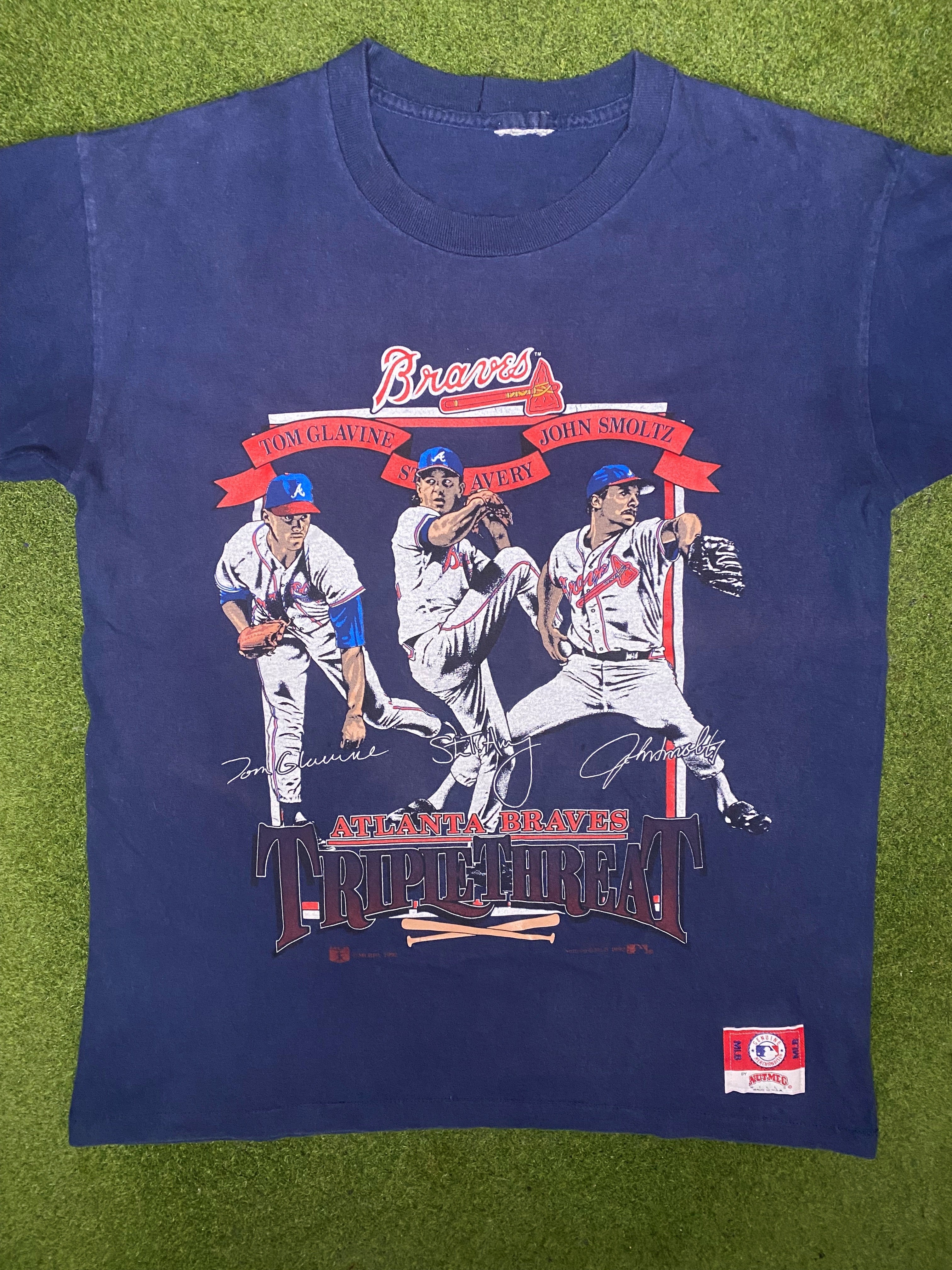
Threads of Glory: How Team Uniforms Became Symbols of Identity
Introduction: More Than Fabric and Color
Before there were dynasties, before highlight reels, before billion-dollar sponsorships — there were uniforms.
Simple, stitched, and sacred.
Sports uniforms have always been more than clothing. They carry the pride of cities, the hope of fans, and the stories of teams that became legends. The moment you pull on your team’s colors, you’re part of something bigger — a shared identity that spans generations.
At GametimeVintage.com, we believe those threads tell the story of sports itself — woven through history, victory, heartbreak, and heritage.
The Early Days: From Function to Symbol
In the early 1900s, sports uniforms were purely functional — designed for utility, not fashion.
Wool jerseys for baseball. Lace-up leather boots for football. Heavy cotton for basketball.
Colors were chosen for visibility, not branding. Logos were minimal, if they existed at all.
But as sports grew — as stadiums filled, as rivalries formed — something changed.
Teams realized that a uniform wasn’t just gear. It was identity.
When the New York Yankees introduced their famous pinstripes in 1912, it wasn’t about aesthetics — it was about distinction. The Dodgers’ script, the Cardinals’ birds on a bat, the Celtics’ shamrock — all became shorthand for pride, legacy, and loyalty.
Fans didn’t just cheer for teams — they wore them.
The Color Revolution: What Team Colors Really Mean
Color became the language of loyalty.
Each shade carried emotion, psychology, and pride — telling you who someone was before they even spoke.
🔴 Red — Energy, passion, and power.
Teams like the Chicago Bulls, St. Louis Cardinals, and Nebraska Cornhuskers used red to intimidate and inspire.
🔵 Blue — Trust, stability, and legacy.
The Yankees, Dodgers, and Cowboys built brands around blue — a color that says “tradition.”
🟢 Green — Growth and grit.
From the Jets to the Eagles, green represents the underdog spirit — loyal, grounded, and relentless.
🟡 Gold — Glory and dominance.
The Lakers, 49ers, and Notre Dame Fighting Irish shine in gold, symbolizing success and excellence.
Sports teams didn’t just pick colors — they built identities around them.
And over time, fans adopted those colors as their own.
When you wear your team’s colors, you’re not just showing support — you’re declaring who you are.
The 70s–90s: The Golden Age of Uniform Design
From the late 70s through the 90s, sports uniforms reached their creative peak — an era collectors now call The Golden Age of Design.
New technology brought satin jackets, polyester warmups, and embroidered logos that popped on and off the field.
Color palettes went bold. Fonts went experimental. Entire generations of fans fell in love with how their teams looked — not just how they played.
-
The Raiders’ silver and black became a streetwear symbol of attitude.
-
The Hornets’ teal and purple defined 90s sports fashion.
-
The Houston Oilers’ sky blue and red became one of the most nostalgic color combos in sports.
-
The Miami Dolphins’ teal and orange embodied coastal swagger and tropical style.
These weren’t just uniforms — they were culture.
And when athletes became icons — Jordan, Bo Jackson, Deion Sanders — the uniform became fashion.
Suddenly, what players wore on the court showed up in music videos, malls, and classrooms across America.
That’s how sportswear became streetwear — and why true vintage still reigns supreme today.
👉 Find authentic vintage team jackets, jerseys, and crewnecks from the 80s and 90s at GametimeVintage.com.
The Logo Era: When Design Met Identity
As branding took over the sports world, logos became as important as wins.
Teams invested millions into symbols that captured emotion in a single image.
The Bulls’ angry red face, the Raiders’ pirate shield, the Yankees’ interlocking NY, the Cowboys’ lone star — these designs became eternal.
Fans tattooed them. Artists sampled them. Streetwear designers reimagined them.
Vintage collectors know: the older the logo, the deeper the meaning.
That’s why original 80s and 90s gear — with classic logos, not reissues — holds cultural and collectible value.
Logos weren’t marketing. They were identity made visible.
From the Locker Room to the Streets
By the 1990s, sports uniforms had fully transcended their purpose.
They weren’t just for players — they were for everyone.
Hip-hop culture adopted team apparel as symbols of pride and style.
Will Smith, Tupac, N.W.A., TLC, and countless others turned sportswear into self-expression.
A satin jacket or a team crewneck wasn’t just support — it was swagger.
Your team’s colors became part of your personal brand.
Today, that energy lives on in vintage sportswear. Every piece carries the attitude of its era — the fit, the fabric, the flair.
At Gametime Vintage, we preserve that feeling. Every authentic piece we carry — whether it’s a Starter jacket, Logo 7 tee, or Champion crewneck — keeps the art of team identity alive.
Why Vintage Teamwear Still Matters
In an era of corporate rebrands and annual uniform updates, vintage stands as a reminder of authenticity.
When you wear a 1994 Miami Hurricanes crewneck or a 1988 Lakers satin jacket, you’re not wearing a copy — you’re wearing the original chapter.
Those old fonts, colors, and designs tell stories modern apparel can’t.
They remind us that sports are more than scores. They’re about belonging — and the clothes we wear to prove it.
Because long after the players retire, the uniforms remain.
Final Thoughts: Our History Is in the Threads
From dusty ballfields to sold-out arenas, from locker rooms to street corners — team uniforms have carried the identity of fans and athletes alike.
They’ve stitched together generations. They’ve sparked rivalries. They’ve defined eras.
And thanks to collectors, creators, and vintage lovers, those uniforms still live on today — in closets, in collections, and in the hearts of fans who never stopped believing.
At GametimeVintage.com, we don’t just sell vintage sportswear.
We protect the culture — one stitch, one color, one story at a time.
Because these aren’t just uniforms. They’re threads of glory.