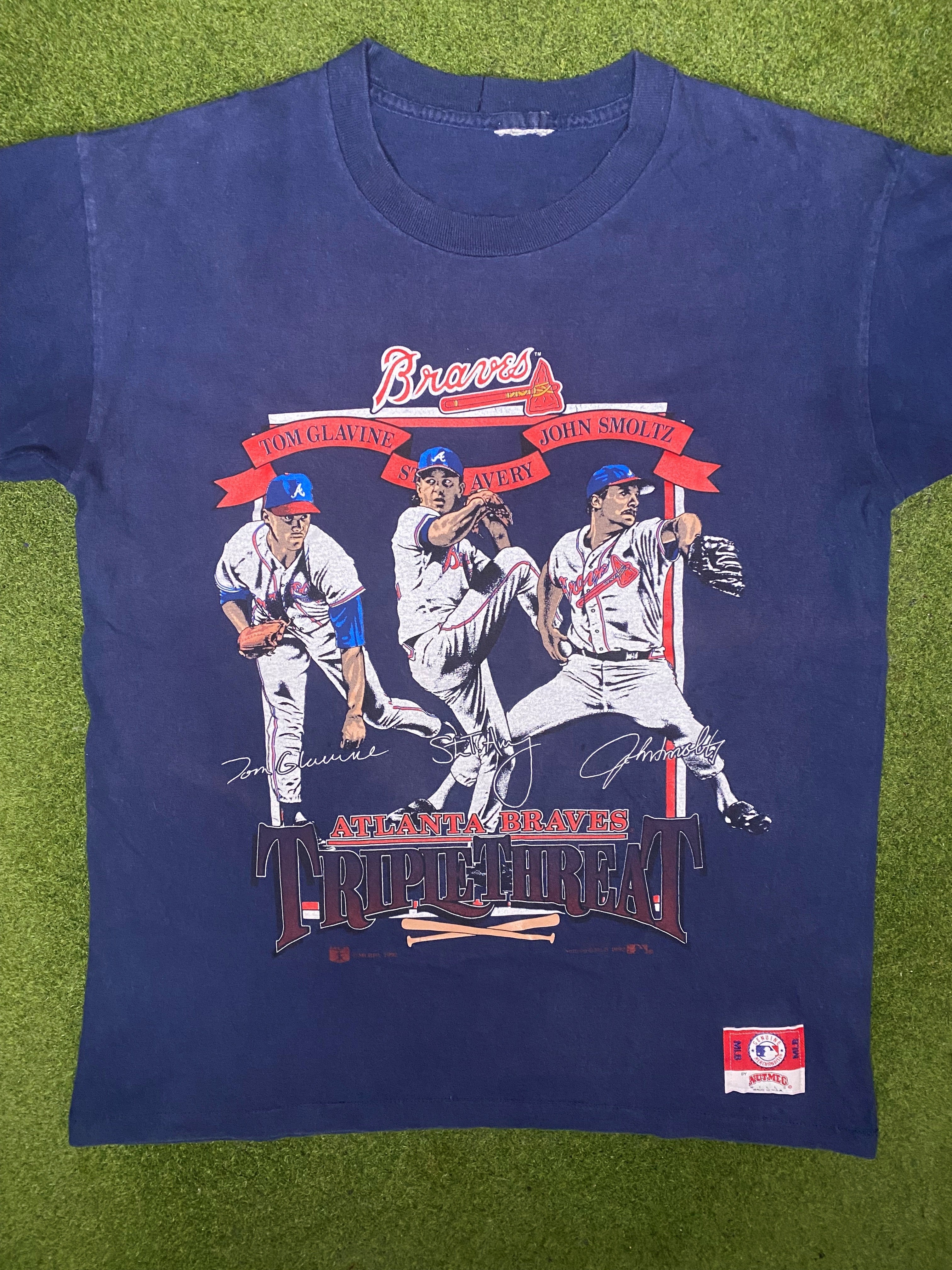
From Sidelines to Streetwear: A 100-Year History of Sports Fan Apparel (NFL, NBA, MLB & NCAA)
Why this history matters (and why collectors care)
Sports apparel didn’t start as fashion. It started as function—heavy wool uniforms, sideline coats, knit caps. Over a century, those pieces evolved into the vintage sportswear we hunt today: satin jackets, bold crewnecks, snapbacks, and throwback jerseys that live as much on the street as in stadiums. Understanding the eras, materials, and licensing shifts helps you spot authentic gems, price them right, and build a collection with cultural weight.
1920s–1940s: Utility, wool, and the birth of fandom
-
Materials & make: Wool flannels, cotton fleece, chenille patches. Early college and pro teams favored durable, warm fabrics.
-
Campus origins: Universities popularized letterman sweaters and crewnecks—athletic gear that quietly seeded school-spirit fashion.
-
Early branding: Logos were modest—block lettering, simple seals, felt/appliqué. Retail distribution was limited; most gear was team-issued or campus-store only.
Collector tells: Felt/chenille lettering, talon zippers, chainstitch embroidery, heavyweight loopwheel knits.
1950s–1960s: Post-war boom, TV era, and basic fan merch
-
Television changes everything. As games hit living rooms, demand for fan items grows.
-
Manufacturers: Names like Champion and Russell expand athletic basics—sweats, tees, warm-ups—often with minimal branding.
-
Team ID grows: You’ll see more block letter city/team names, simple mascots, and early tackle-twill.
Collector tells: Early Champion running man tags, Russell “Southern Co.” tags, single-stitch tees, pre-poly sheen.
1970s: Color, polyester, and the first wave of sports licensing
-
Fabric shift: Polyester/nylon blends introduce satin and windbreaker looks that pop under stadium lights.
-
Licensing matures: Pro leagues and colleges begin formalizing logo licensing, moving beyond team-only issue to broader retail.
-
Silhouettes: Coach’s jackets, satin bombers, track sets, ringer tees—clean, bold, unfussy.
Collector tells: Satin handfeel, snap fronts, flocked graphics, early licensing marks (Ⓡ/TM) on tags or hem labels.
1980s: Showtime aesthetics, bold graphics, and the rise of Starter
-
The look: High-contrast color blocking, oversize logos, metallic satin—flash meets fandom.
-
Brands to know: Starter explodes with licensed NFL/NBA/MLB satin jackets and breakaway warm-ups; Champion’s Reverse Weave becomes a campus staple; Russell Athletic dominates college crewnecks.
-
Mass visibility: National broadcasts + music videos put team jackets and crewnecks into mainstream style.
Collector tells: Original Starter star sleeve hits, inside quilted lining, big back logos, puff-print and plastisol with depth.
1990s: Peak logo mania—streetwear x sportswear
-
Cultural crossover: Hip-hop, MTV, and sneaker culture elevate team gear to streetwear. Think Hornets teal, Bulls red/black, Georgetown Hoyas navy.
-
What booms: Starter jackets, Champion Reverse Weave crewnecks, Nike/Adidas warm-ups, snapbacks with raised embroidery.
-
Graphics: Oversized mascot art, puff ink, script logos, big conference patches.
Collector tells: 90s Champion C sleeve, Made-in-USA tags, Pro Line/Pro Player labels, green underbrims on hats, The Game college snapbacks.
2000s: Retro nostalgia and the throwback jersey era
-
Throwback craze: Fans rediscover classic silhouettes. Retro runs of 70s/80s designs take off; Mitchell & Ness popularizes historic player jerseys.
-
Fit & finish: Boxier cuts give way to slimmer silhouettes, but heritage labels revive old tags and graphics.
-
On-court/on-field: Supplier deals (Nike/Adidas/Reebok eras) standardize pro uniforms; retro alternates appear.
Collector tells: Official “Cooperstown”/“Hardwood Classics” marks, era-correct jock tags, player-accurate fonts.
2010s–Today: Heritage revival and sustainable vintage
-
Secondhand surge: Sustainability + uniqueness fuel demand for authentic vintage over fast fashion.
-
Micro-trends: Y2K team tees, big logo crewnecks, Starter-style satin, script caps, and retro college hats return.
-
Quality hunt: Buyers prefer real era pieces—Reverse Weave, made-in-USA knits, true 90s satin—for weight, drape, and longevity.
Collector tells: Accurate decade tags, proper stitching, correct label fonts, genuine wash/fade patterns versus artificial distressing.
Brand spotlights collectors should know
-
Starter (80s–90s): The quintessential satin jacket and NBA/NFL breakaway warm-ups.
-
Champion: Reverse Weave crewnecks/hoodies—heavyweight cotton, side gussets, shrink-resistant.
-
Russell Athletic: College crewnecks/tees; look for Eagle R and USA tags.
-
The Game: Iconic college snapbacks and modern retro collegiate hats—a must for NCAA collectors.
-
Nike/Adidas/Reebok (supplier eras): Define on-field/on-court aesthetics from the 90s onward.
Printing & construction: how to authenticate vintage
-
Screen print vs puff/plastisol: 80s/90s graphics often sit raised with slight cracking—real age, not faux distress.
-
Tackle twill & appliqué: Stitched letters/numbers signal quality; check zig-zag stitching and backing.
-
Tags & tells:
-
Champion: “Made in USA,” 90s RN numbers, Reverse Weave side panels.
-
Starter: Star cuff logo, Pro Line labels, quilted lining patterns.
-
Russell: Early “RUSSELL ATHLETIC” block fonts, country of origin.
-
-
Fit & fabric: True vintage has heavier fleece, boxier fits, single-stitch hems on older tees, and natural fade at seams/cuffs.
College vs. pro: what changed in licensing
-
Collegiate boom: Centralized licensing in the 80s/90s standardized NCAA branding and opened nationwide retail doors.
-
Pro leagues: NFL/NBA/MLB tightened supplier deals, introducing league patches, holograms, and consistent hangtags—helpful for dating items.
-
What it means for collectors: Look for official league or school marks appropriate to era; mismatched tags + logos are a red flag.
Price dynamics: what drives value now
-
Teams & players: Iconic dynasties (90s Bulls, 80s Lakers, vintage Cowboys/49ers) command premiums.
-
Scarcity: Limited-run satin jackets and defunct teams/conferences (e.g., early Charlotte Hornets, retro Big East) are hot.
-
Condition: Clean knits, intact snaps/zippers, rich color saturation. Light patina is fine; big stains/peel lower values.
-
Story: Bowl games, Finals runs, rivalry prints, retired mascots/logos—history sells.
Styling vintage fan gear today (and why it works)
-
Crewneck + denim: Classic campus vibe; cuff the sleeves to show the Champion C.
-
Satin jacket + tee: Let the back hit/logo do the talking.
-
Retro cap + hoodie: The The Game curved-brim or snapback pairs with any 90s fleece.
-
Mix decades: 80s satin with 2000s sneakers, 90s tee under modern workwear—contrast is king.
Quick checklist: buying authentic vintage online
-
Check the tag (brand, country, era-accurate font).
-
Zoom the print (puff/plastisol texture, natural cracking).
-
Inspect construction (stitch lines, gussets, tackle-twill).
-
Confirm licensing (league/school marks appropriate to decade).
-
Ask for measurements (vintage sizing varies wildly).
-
Prefer natural wear (consistent fade/handfeel over uniform “sandblasting”).
FAQ
Q: Are reissues as collectible as originals?
A: Reissues are great daily wear, but true era pieces generally hold higher collector value.
Q: What’s the best entry point for new collectors?
A: 90s college crewnecks and team tees—affordable, abundant, and highly wearable.
Q: Which brands hold value best?
A: Starter satin, Champion Reverse Weave, and early Nike/Adidas team pieces from winning eras.
Where to start your hunt
-
Vintage NFL Collection: Authentic hoodies, jackets, tees from football’s golden eras.
-
Vintage NBA Collection: Satin jackets, warm-ups, big-logo tees from the 80s–2000s.
-
Vintage MLB Collection: Dugout jackets, script tees, Cooperstown-style pieces.
-
Vintage College Collection: Crewnecks, tees, and The Game–style hats repping your alma mater.