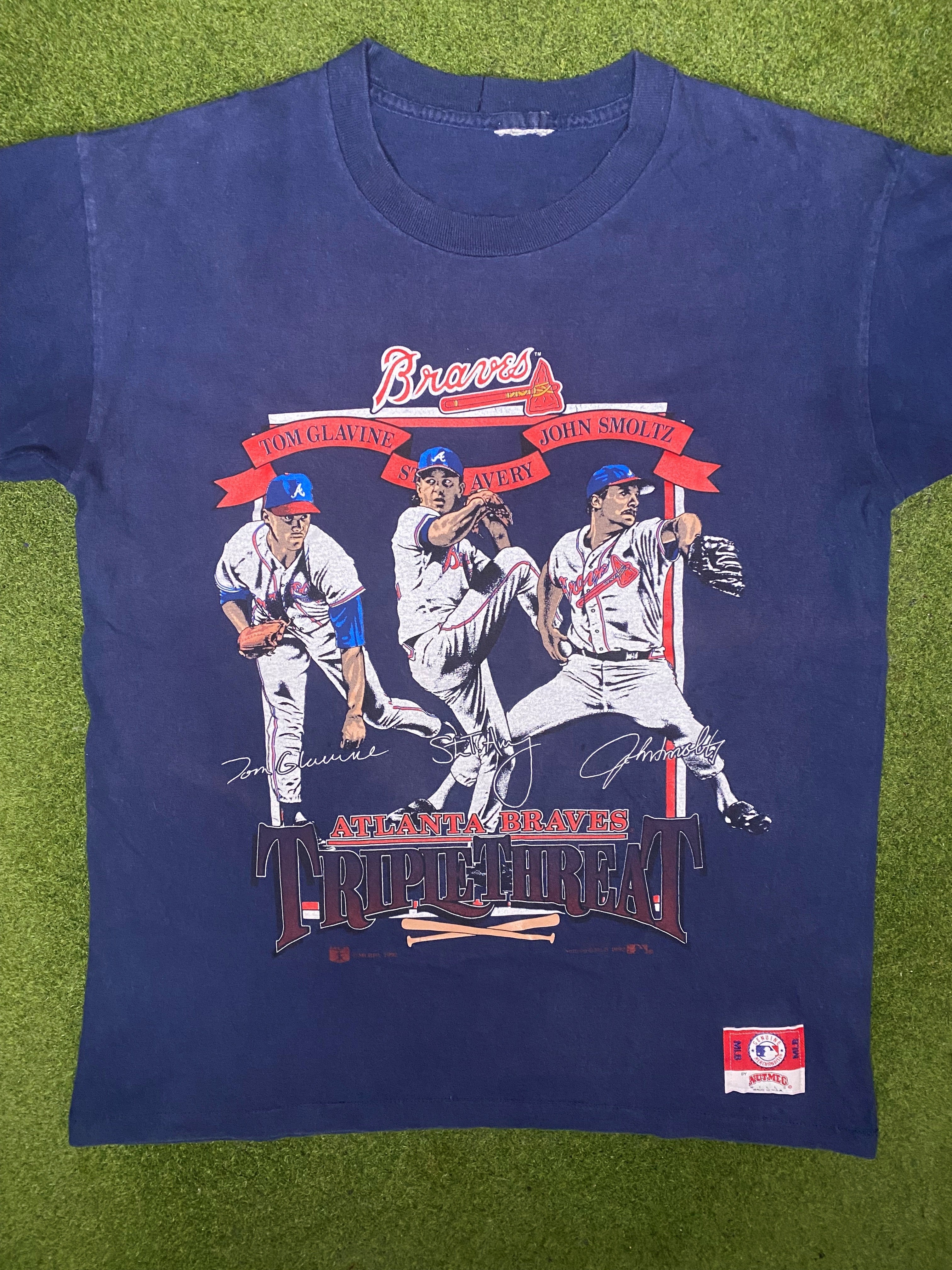
Between the Stitches: The Art and Evolution of Vintage Sports Logos
Introduction: More Than Just a Logo
Every fan remembers their team’s logo — the colors, the shape, the feeling it sparks. But before sports logos became sleek digital icons, they were handcrafted symbols of identity, stitched into uniforms, hats, and memories.
From the blocky mascots of the 1940s to the neon explosions of the 1990s, vintage sports logos reflect more than style — they tell the story of American design, culture, and fandom.
This is the evolution of the sports logo — from humble beginnings to timeless works of wearable art.
The Early Days: Simplicity and Symbolism (1900s–1950s)
In the first half of the 20th century, team logos were designed with one goal: recognition.
-
Baseball and football teams often used single letters or simple monograms, embroidered directly on wool uniforms.
-
Think of the classic New York Yankees “NY”, the Chicago Cubs “C”, or the Detroit Tigers’ Old English “D.”
-
Printing technology was limited — every stitch was hand-done, so designs had to be clean and durable.
Logos in this era weren’t just decoration — they were pride marks, worn by working-class fans who saw their team as part of their city’s soul.
The 1960s: The Birth of Modern Sports Branding
As American sports exploded in popularity, teams began using logos to express personality and regional pride.
-
The rise of television demanded more visually striking designs.
-
Cartoon-style mascots, motion lines, and colorful badges started appearing on helmets and jerseys.
-
Teams like the Baltimore Orioles, Houston Astros, and San Diego Padres introduced playful logos that reflected their cities.
This was also the birth of the sports graphic designer — artists who mixed marketing with artistry. Hand-drawn, painted, and airbrushed designs replaced the simple stitched letters of the past.
Why It Mattered:
For the first time, sports teams realized their logos weren’t just identifiers — they were brands.
The 1970s: Color, Character, and Creativity
The 70s marked a creative revolution in sports design.
-
The NBA and MLB introduced bold, groovy typography that matched the decade’s psychedelic energy.
-
Logos became more colorful, with gradients and funky shapes replacing stiff heraldry.
-
Teams like the Milwaukee Brewers (glove logo), Vancouver Canucks (stick-in-rink), and Denver Nuggets (rainbow skyline) debuted designs that are now vintage classics.
This was the beginning of sports logos as pop art — collectible, cool, and instantly recognizable.
Fans weren’t just supporting teams anymore — they were wearing art.
The 1980s: Corporate Precision Meets Neon Dreams
The 1980s brought professionalism to sports branding.
-
Computer-aided design made logos cleaner, sharper, and more reproducible.
-
Television deals created demand for logos that popped on screen.
-
Teams leaned into futuristic looks: sharp angles, chrome effects, and block fonts.
The Influence of the Times
-
Neon culture and MTV aesthetics influenced sports design.
-
Teams like the Miami Dolphins, Charlotte Hornets, and Seattle Seahawks added vibrant, eye-catching palettes.
-
Nike and Starter began using logos as lifestyle fashion — fans wore them as badges of identity.
Why It Mattered:
The 80s made logos everywhere — from jackets to cereal boxes. They became part of daily culture, signaling the growing bond between sports and fashion.
The 1990s: When Logos Got Loud
The 90s were a design explosion. Bigger, bolder, brighter — logos screamed energy.
-
Teams experimented with motion, metallics, and attitude.
-
The Toronto Raptors, Vancouver Grizzlies, and Tampa Bay Lightning unleashed cartoonish, aggressive designs.
-
Fonts became jagged, mascots became muscular, and colors went wild — teal, purple, and neon dominated.
Why It Mattered:
For fans growing up in the 90s, these logos weren’t just emblems — they were childhood nostalgia in full color.
Starter jackets, snapbacks, and oversized tees made team branding a fashion movement.
Wearing your team wasn’t just support — it was style.
The Design Icons: Timeless Vintage Logos That Endure
Some vintage logos have achieved near-mythical status.
-
Milwaukee Brewers (1978–1993) – The “MB” glove is a masterpiece of hidden design.
-
Houston Astros (1975–1993) – The orange-and-yellow “Tequila Sunrise” stripes.
-
Charlotte Hornets (1988–2002) – The teal hornet in sneakers defined 90s cool.
-
Chicago Bulls (1966–present) – So perfect it’s never been changed.
-
Hartford Whalers (1979–1997) – The negative-space “W” and whale tail, still adored by design purists.
These logos remind us that great design doesn’t age — it only grows more iconic.
The Forgotten Gems: Defunct Teams, Legendary Looks
Some of the most sought-after vintage gear comes from teams that no longer exist.
-
Montreal Expos – The tricolor “M” still pops on hats decades later.
-
Seattle SuperSonics – The skyline logo remains one of basketball’s most beloved.
-
Hartford Whalers – A cult favorite, symbolizing nostalgia and elegance.
-
Vancouver Grizzlies – Their fierce teal bear logo is now a streetwear favorite.
These designs are more than memories — they’re part of visual Americana, immortalized through fans who keep wearing them long after the teams disappeared.
The Craft: How Vintage Logos Were Made
Before computers streamlined the process, sports logos were handcrafted works of art.
-
Artists sketched concepts on tracing paper, painted mockups, and tested embroidery.
-
Each stitch mattered — embroidery placement could change the feel of the design.
-
Vintage logos have texture, depth, and imperfection — things that digital precision can’t replicate.
That’s why collectors and designers still study old patches, pennants, and game-worn gear — they carry the marks of human craftsmanship.
Logos and Emotion: Why We Connect So Deeply
Sports logos aren’t just visuals; they’re emotional anchors.
-
They remind us of family traditions, local pride, and unforgettable seasons.
-
Seeing a vintage logo can instantly transport you — to a packed stadium, a childhood bedroom, or a 90s TV broadcast.
-
The wear and fade of old fabric even enhances that nostalgia.
Logos are storytelling tools. They represent eras of identity, design philosophy, and the heart of fandom.
The Vintage Revival: When Old Logos Became New Again
Today, old-school logos are back in full force.
-
NBA City Edition jerseys, MLB throwbacks, and NHL retro nights celebrate vintage branding.
-
Streetwear collabs (like Mitchell & Ness, Supreme, and Nike’s retro lines) reissue classic team designs.
-
Vintage shops like Gametime Vintage keep authentic, original gear in circulation — the real artifacts of sports history.
Why It Works:
Because in a world of sleek, minimalist branding, the charm of vintage logos lies in their imperfection and personality.
What Logos Teach Us About Design
Studying vintage logos reveals timeless design lessons:
-
Simplicity Wins – The most enduring logos (Yankees, Bulls, Dodgers) use simple forms.
-
Color Has Character – A team’s palette tells its story; think Raiders black or Lakers gold.
-
Imperfection = Authenticity – Older logos have hand-drawn quirks that make them human.
-
Emotion Beats Trend – Fans connect with feeling, not just graphics.
In many ways, vintage logos prove that design isn’t just seen — it’s felt.
Conclusion: The Legacy Woven Into Every Patch
Every vintage sports logo — whether stitched on a jacket or printed on a tee — carries decades of culture, craftsmanship, and connection.
They tell the stories of cities, teams, and fans who lived for every play.
They remind us that before sportswear was fashion, it was fandom, pride, and art.
And even today, as teams rebrand and designs evolve, the classics remain undefeated.
Because while rosters change and championships fade, one truth stays stitched into every fabric of the game:
Great logos never die — they just get more vintage.